
Open Daily 9am - 6pm
2713 South Hayner Road
Janesville, WI 53548
Homegrown Skelly Produce

Strawberries
-
Available mid-June through early July
-
Sold only at the farm (and select Saturdays at the Janesville Farmers' Market)
-
2026 prices and current field status can be found here
-
This is the only crop we grow that is a perennial
Growing Strawberries 101 Strawberries are the only crop we grow that is a perennial, which means they keep coming back year after year. Each bed is on a four-year rotation. In order to always have enough berries, we will plant new beds every other year. We plant a new bed in late April and the plants will grow to produce some berries by June if we let them. Instead we will go through and cut off all the blossoms before they form berries. We do this to force the plants to grow larger instead of producing berries. This way by the second year, the plants will be large enough to produce a bountiful harvest. Since strawberry plants will tend to spread out in every direction, we spend many hours tilling in between the rows to make sure they stay where they need to be. The first year requires the most work! By the second, third, and fourth year, we will harvest like normal until they are plowed under after the harvest of year four is completed. Summer and Winter Care Once the season is finished, we will prepare the field for the next season by completing a renovation process. The plants are mowed down low to the ground and we will deep till in between the rows. This helps promote new growth the following season and helps with weed control. By August the plants will be back to about their normal height and will continue to grow until the first frost. By the time the roots are dormant, which normally occurs around late November, we will cover the entire field with a layer of chopped up corn stalks. This added layer protects the plants from extremely cold temperatures and mid-winter thaws like we are all used to in Wisconsin winters. The cover will come off the plants by mid-April so they can start growing for another season of deliciousness! Wisconsin Varieties We always say that the flavor of our berries is completely different than anything you'll find in the grocery stores. That's because in Wisconsin, we grow varieties that are not meant to be shipped across the country, so they really are different! Farmers in the south have a completely different way of growing strawberries (their plants are annuals!), so the size, shape, and texture of our berries are truly unique. In our fields, we have around 10 different varieties growing that all ripen at different times. Some are meant to be the first ones to ripen, so they tend to be smaller in size. Some are meant to be mid-season berries, so they tend to last the longest. And some are meant to ripen towards the end of our season, so they tend to be some of the tastiest. We plan our varieties so we have around a three-week harvest period. The berries we grow are meant to be consumed/processed within 24 hours of picking. For more information on storage tips, click here.

Sweet Corn
-
Available early July through early September
-
Sold at the farm and roadside stands
-
2026 prices: $8.00/doz., $5.00/half doz., $1.00/ear
-
Want to buy large quantities? Call the farm and ask for prices and availability! 608-757-1200
Growing Sweet Corn 101 In 1989, we planted four rows of sweet corn around our house so our family could enjoy fresh sweet corn. We ended up selling any leftover ears. After that, well, you can guess what happened! We now grow around 45 acres of sweet corn that supplies our farm and 8 roadside produce stands daily from early July through Labor Day. But, just because we now grow a LOT of sweet corn, doesn't mean our quality has decreased. Our corn is hand-picked at peak ripeness every morning. How do we get a season so long with ripe ears to pick daily? By mid-April we will start planting our sweet corn. We plant only a few acres at a time all the way through late June. Our goal is to plant once every three days. This way we have some corn ready to be picked in early July and some corn that's not ready until September. Trust us, you don't want to be eating corn in September that was planted in April! Sugar Enhanced Sweet Corn There are many different varieties of sweet corn out there, including the famous "Super Sweet" varieties you can find in grocery stores. Super sweets are meant to have a long shelf life without losing much of its flavor. This also makes the kernels more tough so they hold their structure longer. Our season is short and we're not trying to supply the grocery stores across the country. This is why we've found that growing the variety called Sugar Enhanced is the best. The shelf life is short (only 1-2 days after it's picked), but the ear is packed with delicious flavor. We always recommend consuming or processing the corn the same day you buy it from us to experience the best flavor. If that's not possible, make sure the ears get refrigerated ASAP and consume the next day. Sweet Corn Freezing Tips If you're interested in enjoying Skelly sweet corn all winter long, follow these freezing tips to process the ears you purchased. If you'd like to place a large order for corn, call the farm and ask for prices and availability. We recommend waiting until after August 1st for the largest ears. Husk and wash the corn while you bring a large kettle of water to a boil. Once the water is boiling, blanch (boil) the entire ear of corn (several at one time) for 4 minutes. Remove the corn and immediately cool down in an ice water bath (we use several changes of water to cool more quickly) since you do not want the corn to still be warm when it enters the freezer. Completely cooling the corn before freezing is important. Drain the ears of corn and then remove the corn from the cob. A technique we use eliminates much of the mess. You will need an electric knife and either a bundt or angel food cake pan. Place the large end of the cob in the top of the tube. Carefully holding the other end of the cob, slice down each side of the ear. The kernels will fall into the pan, which keeps your work area much neater. Approximately 3 ears of corn will give you two cups of corn when removed from the cob. Place in freezer containers, freeze, and enjoy this winter. Corn can be frozen on the cob if you wish. Blanch the ears between 7 and 10 minutes and cool in ice water. Drain well and place in freezer bags.

Tomatoes
-
Available late June through late September
-
Sold at the farm and roadside stands
-
2026 prices: $3.75/lb.
-
Our early tomatoes are grown directly in the ground under our hoop houses, just as they are grown outside
-
We sometimes have an oversupply and sell in bulk. Call the farm for prices and availability! 608-757-1200
Growing Tomatoes 101 Wisconsin tomato season typically doesn't start until early August, but Skelly's somehow has homegrown tomatoes in late June? How!? By growing them inside our greenhouses! We get a lot of questions about the method of growing our plants inside our greenhouses. They are not grown in pots and they are not hydroponic. They are simply grown the same way as they are outside, except in a controlled environment. We have five large greenhouses that house the majority of our tomato crop. Each greenhouse has a natural soil floor where the tomatoes get planted just like outside. We can roll the sides up during the day so the plants don't overheat and roll them back down at night to keep them safe from freezing temperatures. Drip irrigation lines are run down each row to make sure the plants have just enough moisture. By growing the plants in the ground, they are able to take advantage of the nutrients already in the soil. By growing them inside our greenhouses, we are able to have homegrown tomatoes more than a month earlier than anyone else in southern Wisconsin. It's a win-win! Grafted Tomato Plants In 2016 we started experimenting with grafted tomato plants in our greenhouses. Now, 100% of our greenhouse tomatoes are grafted plants. Grafting is the process of combining the roots of one variety of tomato with the leafy top of a different variety. This allows for maximum quality. The root stem and the top are two different plants that get cut apart in the middle and then grafted together. The top and bottom are held together with a clip and after 24 hours in a warm, dark room, the plants start growing together. We use grafted plants because our tomatoes are grown in the same soil year after year. The plants are more prone to disease without a rotation, so we use the roots of disease-resistant tomatoes and the tops of plants that produce large, abundant tomatoes. Because of these awesome grafted tomato plants, we typically have an oversupply during our peak season. If you're looking to get some canning done and would like to buy in bulk, call the farm to check for availability and to place an order. The timing on our oversupply varies year to year, so it's best to call and ask.

Muskmelon
-
Available late July through mid-September
-
Sold at the farm and roadside stands
-
2026 prices: $5-$7 each, depending on varieties
-
For a longer shelf life, pick a melon with a greener skin and let it ripen on your counter

Watermelon
-
Available early August through late September
-
Sold at the farm and roadside stands
-
2026 prices: $8-$10 each, depending on size
-
All melons are picked ripe and ready to eat

Cucumbers, Zucchini, and Summer Squash
-
Available early July through late August
-
Sold at the farm and roadside stands
-
2026 prices: $2.00 each or 3 for $5.00 for cucumbers, $2.00 each for zucchini and summer squash
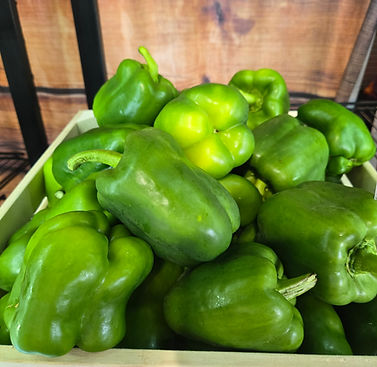
Green Peppers
-
Available late July through mid-August
-
Sold at the farm and roadside stands
-
2026 prices: $1.25 each
-
We only harvest peppers once per week, so our supply is generally smaller

Green Beans
-
Available mid July through late August
-
Sold at the farm and roadside stands
-
2026 prices: $4.00/lb.
-
Our beans are all hand picked, making it one of the hardest crop to harvest

Pumpkins
-
Available early September through Halloween
-
Sold at the farm only
-
2026 prices: $.45/lb. for orange carving, other varieties vary

Fall Squash
-
Available mid-September through Halloween
-
Sold at the farm only
-
2026 prices: $1.00/lb.
-
We grow many different varieties including butternut, acorn, spaghetti, and more
Other Regional Supplemental Produce

Asparagus
-
Available late May through mid June
-
Sold at the farm
-
2026 prices: $7.00/bundle
-
The asparagus we sell is from a local grower in Rock County!

Red and Yellow Onions
-
Available mid-June through late August
-
Sold at the farm and roadside stands
-
2026 prices: $1.25/yellow, $1.75/red
-
Location varies throughout the season

Red and White Potatoes, Sweet Potatoes, Baking Potatoes
-
Available mid-June through late August
-
All sold at the farm and only red and white potatoes at roadside stands
-
2026 prices: $6.75/large bag, $4.50/small bag of red and white potatoes, $1.25/lb. other potatoes
-
Location varies throughout the season

Rhubarb
-
Available late May through early June
-
Sold at the farm
-
2026 prices: $6.00/lb.
-
The rhubarb is grown locally by Christensen's Farm and only available for the first few weeks of our season!

Blueberries
-
Available late May through late August
-
Sold at the farm and roadside stands
-
2026 prices: $4.00/pint, $40/10lb. box
-
We currently are well stocked with fresh Michigan blueberries!

Peaches
-
Available late May through late August
-
Sold at the farm and roadside stands
-
2026 prices: $3.75/lb. (prices can vary with shipments)
-
We sell peaches from across the country as the season changes. We try to grab peaches from Colorado, Missouri, Michigan, and Georgia for the best flavor!

Red Cherries and Rainier Cherries
-
Available late May through early August
-
Sold at the farm and red cherries at roadside stands
-
2026 prices: $8.99/lb. (prices can vary with shipments)
-
Most of the cherries we sell come from Washington when in season. We try to get ahold of Rainier cherries for a short time too. Call the farm for availability on those.

Apples
-
Available late May through October
-
Sold at the farm and roadside stands (August and early September only)
-
2026 prices: vary with each variety
-
Come fall, we try our best to source apples from local orchards. Some of our varieties do come from Michigan, but they are still fresh!

Plums
-
Available late May through August
-
Sold at the farm only
-
2026 prices: $4.00/lb.
-
Our plums we sell have a juicy, white flesh

Lettuce
-
Available late June through September
-
Sold at the farm only
-
2026 prices: $2.50/bundle
-
We highly suggest pairing this with our homegrown tomatoes and Sorg's bacon for a fresh summer favorite: a BLT sandwich!